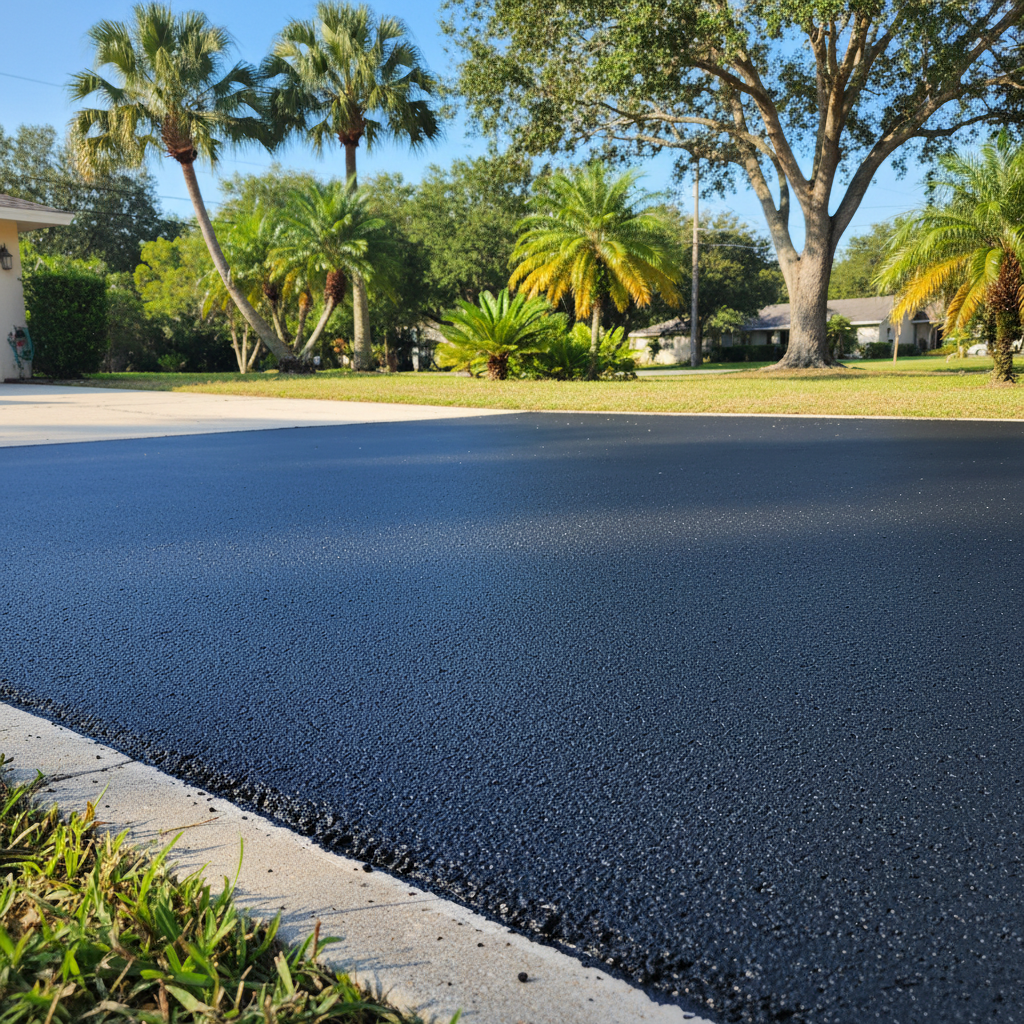
Do I really need to sealcoat my asphalt driveway?
Look, I'm not gonna tell you it's a legal requirement or anything, but if you want your driveway to last, then yeah, you absolutely should. Think of it like sunscreen for your skin, or a fresh coat of paint on your house. Asphalt, especially here in South Florida, takes a beating. The sun, the rain, the humidity – it all works to break down the binders in the asphalt, making it brittle and prone to cracking. Sealcoating puts a protective layer over that, shielding it from the elements and preventing water from seeping into the base. Without it, you're just watching your investment slowly crumble away, and trust me, replacing a whole driveway is a lot more expensive than regular sealcoating.
How often should I have my driveway sealcoated?
This is probably the most common question I get. For most residential driveways in Plantation, I generally recommend every two to three years. Now, that's not a hard and fast rule, it can depend on a few things. If your driveway gets heavy traffic, like you've got a lot of cars coming and going, or if it's constantly exposed to direct, intense sunlight with no shade, you might lean closer to the two-year mark. If it's a less-used driveway or gets some good shade from those big oak trees we see all over neighborhoods like Central Park, you might be able to stretch it to three. The key is to keep an eye on it. If you start seeing it fade, look dull, or show minor surface cracks, it's probably time.
What's the best time of year to sealcoat in Plantation?
This is critical for us down here. You can't just sealcoat whenever you feel like it. The material needs specific conditions to cure properly. What we're looking for is dry weather, with temperatures consistently above 50°F, and ideally, not too humid. That means our prime season is usually late fall through early spring. Once May hits and we start getting into our daily afternoon downpours and sweltering humidity, it gets tricky. The sealcoat won't dry right, and you'll end up with a mess or a job that doesn't last. So, if you're thinking about it, plan for those cooler, drier months. That's when Majestic Asphalt Solutions does its best work, ensuring a proper, long-lasting finish.
How long does the sealcoating process take, and when can I drive on it?
For a typical residential driveway, the actual application usually only takes a few hours. But that's not the whole story. Before we even start, we've got to clean the surface thoroughly, fill any cracks, and address any oil spots. That prep work can add some time. Once the sealcoat is down, the most important thing is letting it cure. You'll need to keep all vehicles off the driveway for at least 24 to 48 hours, depending on the specific product we use and the weather conditions. Foot traffic can usually resume sooner, after about 12-24 hours. Trying to drive on it too soon is a surefire way to mess up the fresh coat, leaving tire marks and reducing its effectiveness. Patience is a virtue here.
Will sealcoating fix existing cracks and potholes?
This is a common misconception. Sealcoating is a protective layer, not a structural repair. Think of it as a topcoat. It'll fill in tiny hairline cracks and make them less visible, but it won't fix anything significant. If you've got deeper cracks, potholes, or areas where the asphalt is really deteriorating, those need to be repaired *before* sealcoating. We'll clean out the cracks, fill them with a hot rubberized crack filler, and patch any potholes. Then, once those repairs have settled, we apply the sealcoat. Skipping those repairs means the sealcoat will just bridge over the problems, and they'll likely reappear quickly, defeating the purpose.
What's the difference between DIY sealcoating and hiring a professional?
I've seen plenty of DIY jobs, and honestly, most of them don't turn out great or last very long. It might seem like a simple enough task – buy a bucket, roll it on. But there's a lot more to it. Professionals like us have commercial-grade sealants that are far superior to anything you'll find at a big box store. We also have the right equipment for proper cleaning, crack filling, and even application techniques that ensure an even, durable coat. Plus, we know how to handle the specific challenges of our South Florida climate. A bad DIY job can actually do more harm than good, leading to uneven coverage, poor adhesion, and a shorter lifespan, meaning you'll be doing it again sooner or paying a pro to fix it. It's one of those jobs where paying for expertise really does save you money in the long run.